Flip the Pyramid!!
posted on
January 10, 2026
I don’t think I ever imagined we’d live in a time where the South Park and Simpsons’ jokes would be a reality, but here we are. I have often shared the clip from the 2014 South Park episode where they flip the food pyramid over to save the country's health. That’s really about as much of the show as I’ve watched ever.
I am THRILLED to see a massive shift in our dietary guidelines toward REAL foods! I think the fact that it has taken this long speaks volumes to how these guidelines have been set over my lifetime. Every 5 years, the USDA and HHS update the dietary guidelines. Food lobbying groups carry a lot of weight in what’s been recommended in the past, with an emphasis on processed foods, where the $$$ are for these interest groups.
The USDA and HHS guidelines guide the food served to those with the least control over what they eat: kids in schools, patients in hospitals, soldiers in our military, and inmates in prisons. It also directs where the money goes to support food production. The heavy grain and carb factor in the past ‘food pyramid’, ‘my plate.’ means much of the “Farm Bill” funding goes to grain farming, which makes not only the grains for the ultra-processed cereals, breads, cakes, cookies and chips that fill the center isslies of our grocery stores, but also the High Frutcoes Corn Sryup and other fillers in so much of the ‘food’ we are being sold.
When I last checked, the only non-grain crops in the US receiving government support were apples. Meaning our produce farmers are not eligible for much of the “Farm Bill” support. Meaning that many focus efforts on growing a crop that has the financial safety net of government subsidy. I’m hoping these new guidelines will create a shift in how we are supporting our food producers.
Overall, I think the recommendations fall a bit short of ideal. I think they miss the mark as far as vegetables at 3 servings a day. The recommendations on dairy and grains still call out to me that our industrial food companies are still throwing their weight around. Of course, I’m happy to see meat and eggs topping out the recommendations. I guess we are all biased to what we know and do.
That being said I think this conversation about getting REAL and WHOLE foods in our bodies will help shift the overall health of our society. Calling out no-added-sugar and feeding yourself based on age, weight, activity, and gender are all steps in the right direction.
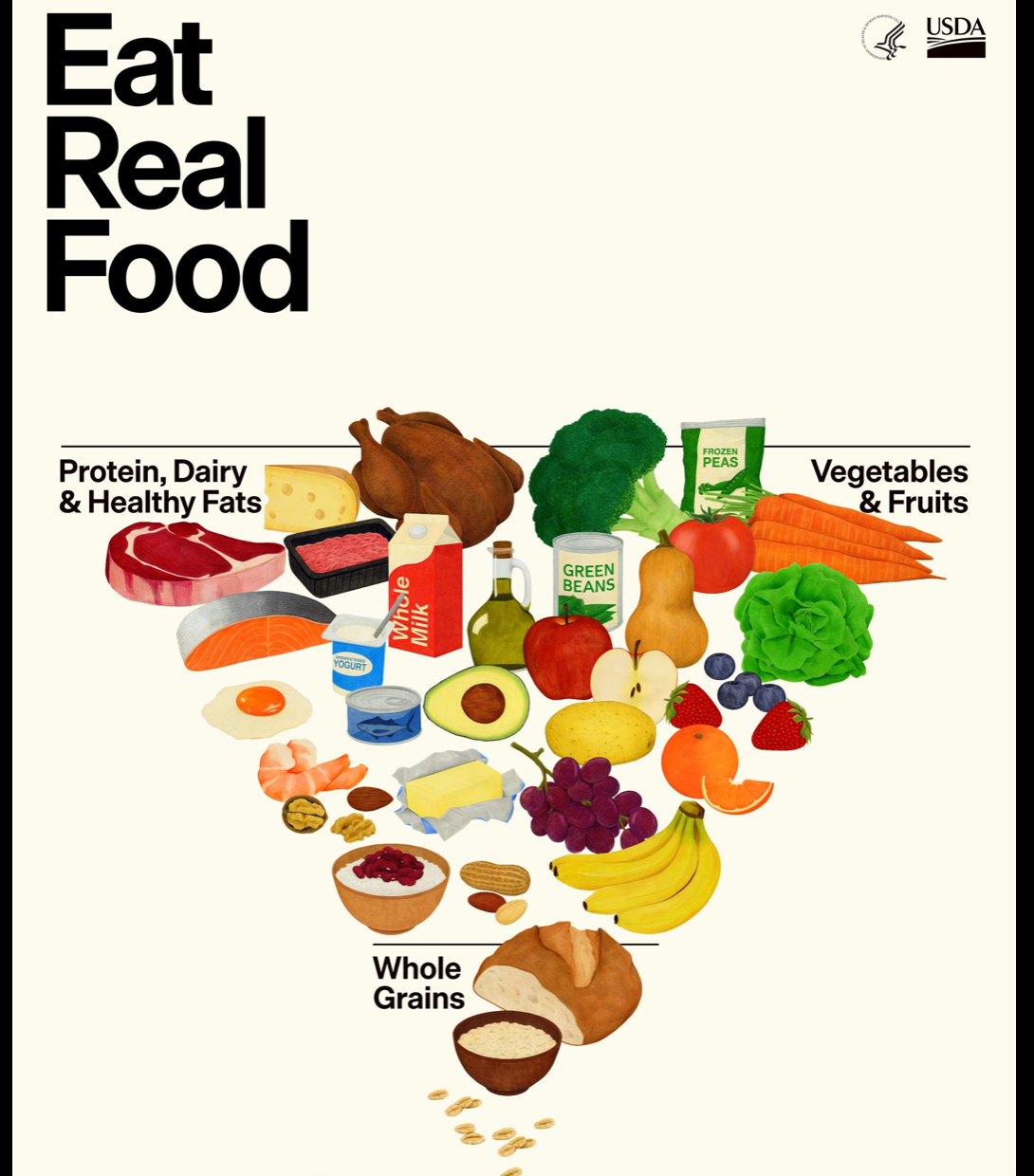
Here are the bullet points of the new guidelines right from the USDA website.The Guidelines emphasize simple, flexible guidance rooted in modern nutrition science:
- Prioritize protein at every meal
- Consume full-fat dairy with no added sugars
- Eat vegetables and fruits throughout the day, focusing on whole forms
- Incorporate healthy fats from whole foods such as meats, seafood, eggs, nuts, seeds, olives, and avocados
- Focus on whole grains, while sharply reducing refined carbohydrates
- Limit highly processed foods, added sugars, and artificial additives
- Eat the right amount for you, based on age, sex, size, and activity level
- Choose water and unsweetened beverages to support hydration
- Limit alcohol consumption for better overall health
I know the shift to whole foods had a MAJOR impact on my family's health and is ultimately what brought us to farming. I am hoping that new recommendations will help steer other families to feel the positive changes we did. I know the change from the convenience, the price (at the register), and the highly palatable flavors of ultra-processed foods can be a challenge and take time, but is so worth it!
Do these guidelines change anything for you? Reinforce what you’ve believed for a while? I’d love to hear your thoughts.
Happy Saturday,